Lecture 9 · Interactive explanation
A clean reading is not the same as a maximal effort
Two separate problems appear in the lecture: a sensor can produce a bad reading, or the recording period can lack the experience you need to estimate a quantity.
230 bpm is an invented teaching cutoff, not a universal validated cleaning rule. A percentile reduces dependence on one extreme, but it is not automatically a valid estimate of true maximal heart rate.
Why the missing hard effort matters
If all sessions were easy, clean data can still underestimate the maximum. Normalizing training intensity by that underestimate can then overstate relative intensity. A filtering algorithm cannot manufacture an unrecorded maximal effort.
What else makes user data useful?
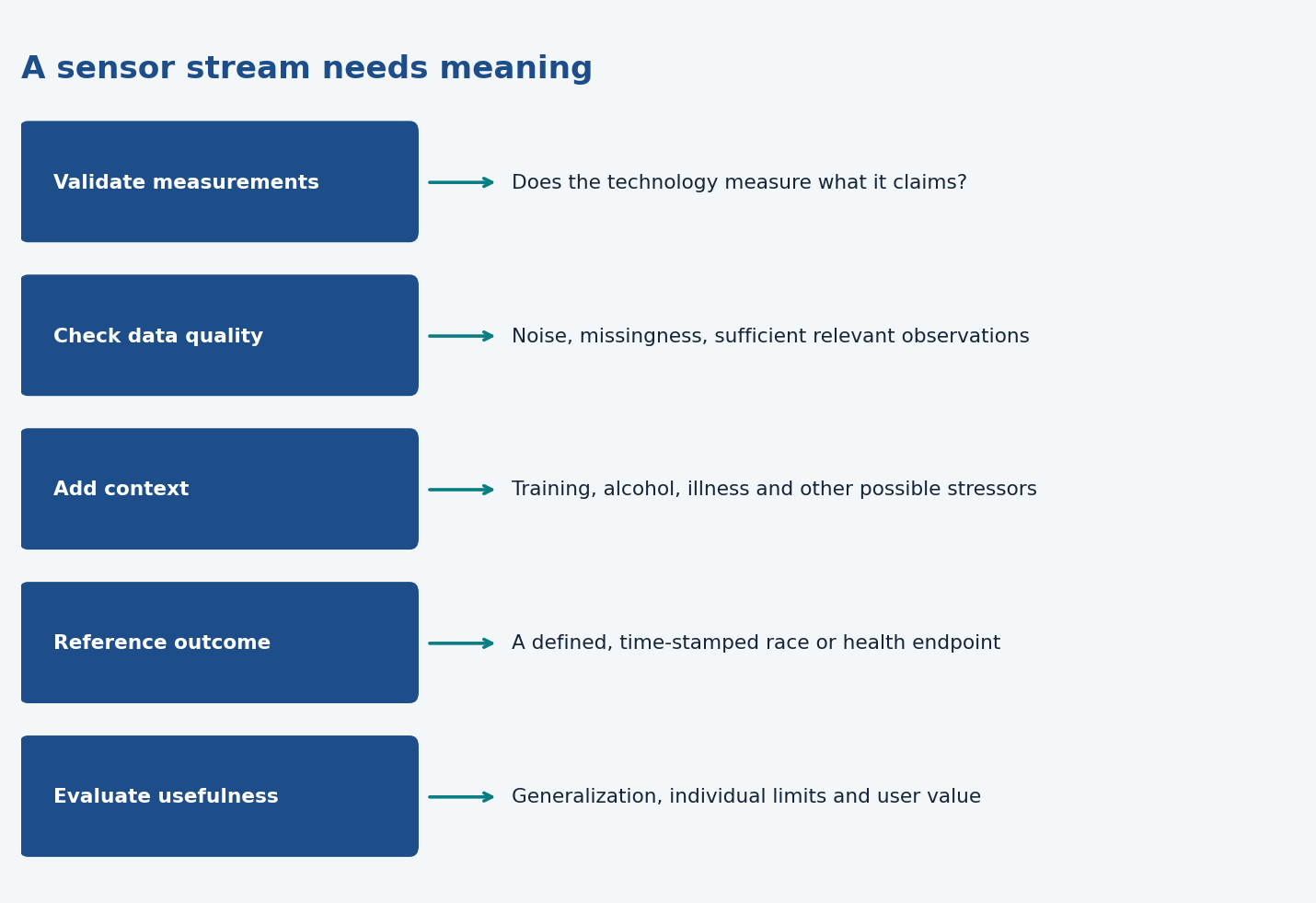
A useful target such as a race result or time-stamped symptom report gives the physiology a reference. Context helps distinguish possible stressors; representativeness and individual differences still need checking.